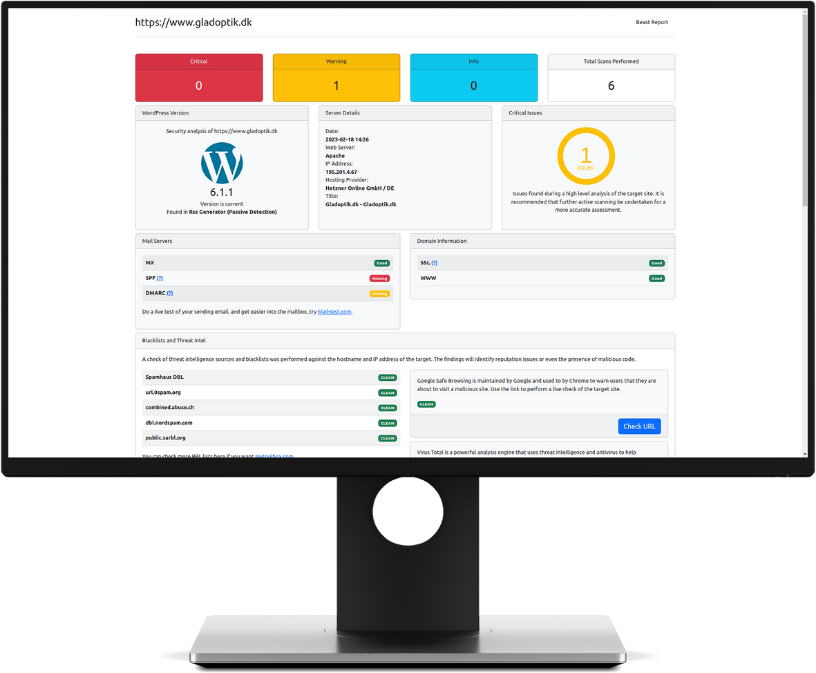
Check your domain for security or possible fraud.
You can get a free scan of your website here.
Go premium and secure.
If you need daily scans, and receive notifications in case your domain is insecure, you can read more about our packages by our partner VikingMedia.ch.
As the internet becomes an increasingly central aspect of modern life, website security has become more critical than ever. Whether you're running a personal blog, an e-commerce site, or a large corporate website, ensuring the security of your site is essential for protecting your users and safeguarding your organization's data. In this article, we'll explore some of the key aspects of website security, including the importance of SSL and keeping your website updated.
SSL and website security
One of the most crucial elements of website security is SSL, or Secure Sockets Layer. SSL is a protocol that encrypts data between a user's browser and a website, ensuring that any information exchanged between the two is secure and private. SSL certificates are issued by trusted third-party providers, and they help to verify a website's identity and ensure that any information transmitted to the site is protected.
There are several reasons why SSL is so important for website security. First and foremost, SSL helps to protect users' sensitive information, such as login credentials, credit card numbers, and personal data. Without SSL, this information could be intercepted by malicious actors and used for nefarious purposes. In addition to protecting users, SSL can also help to improve a website's search engine rankings, as search engines tend to favor sites that use SSL.
Keeping your website updated
Another critical aspect of website security is keeping your site updated. This includes not only updating your website's content but also regularly updating the underlying software and applications that power your site. This is because many website vulnerabilities are caused by outdated software that has not been patched or updated to address known security issues.
For example, if you're running a WordPress site, it's essential to keep your WordPress installation and any plugins or themes you use up to date. This can help to prevent vulnerabilities that could be exploited by hackers to gain access to your site or steal user data. Similarly, if you're running a custom-built website, it's important to ensure that any third-party libraries or frameworks you use are regularly updated to address any security issues.
Conclusion
In conclusion, website security is critical for protecting your users and ensuring the integrity of your organization's data. Two key aspects of website security are SSL and keeping your site updated. SSL helps to protect users' sensitive information and can improve your website's search engine rankings, while keeping your site updated can help to prevent vulnerabilities that could be exploited by hackers. By prioritizing website security, you can help to build trust with your users and protect your organization from potential security breaches.